


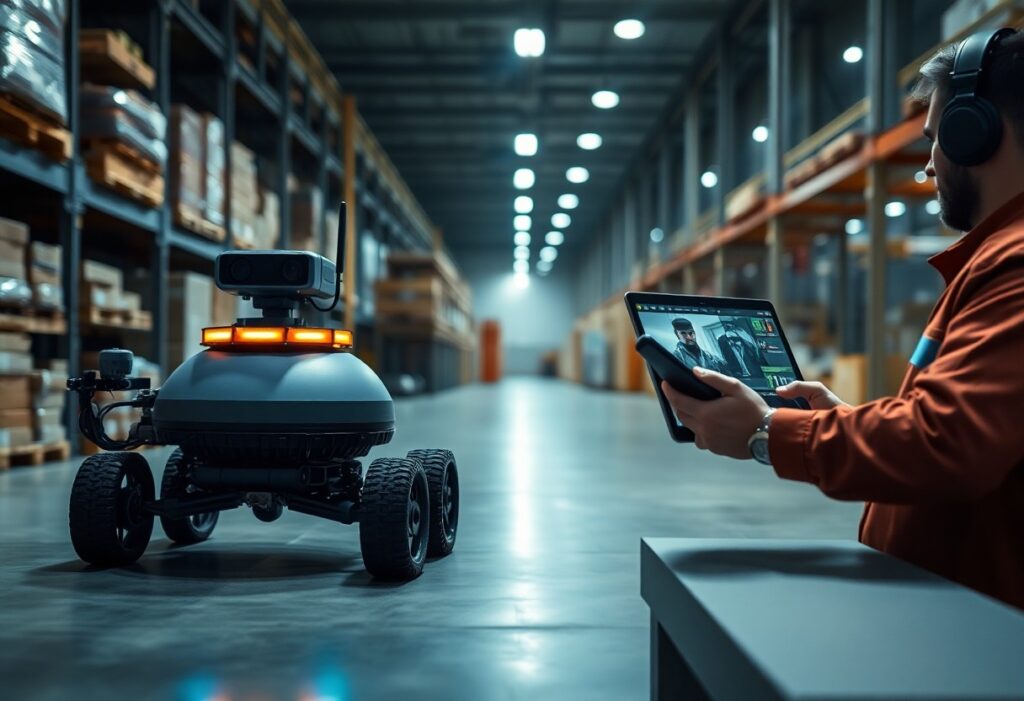
Most people conflate autonomous agents and copilots, and I break down how they differ so you can choose safely and effectively. I explain that agents act with independent decision-making while copilots provide assistive guidance, and I warn about the danger of unchecked autonomy alongside the positive gains in productivity you can expect when you apply them to your workflows.
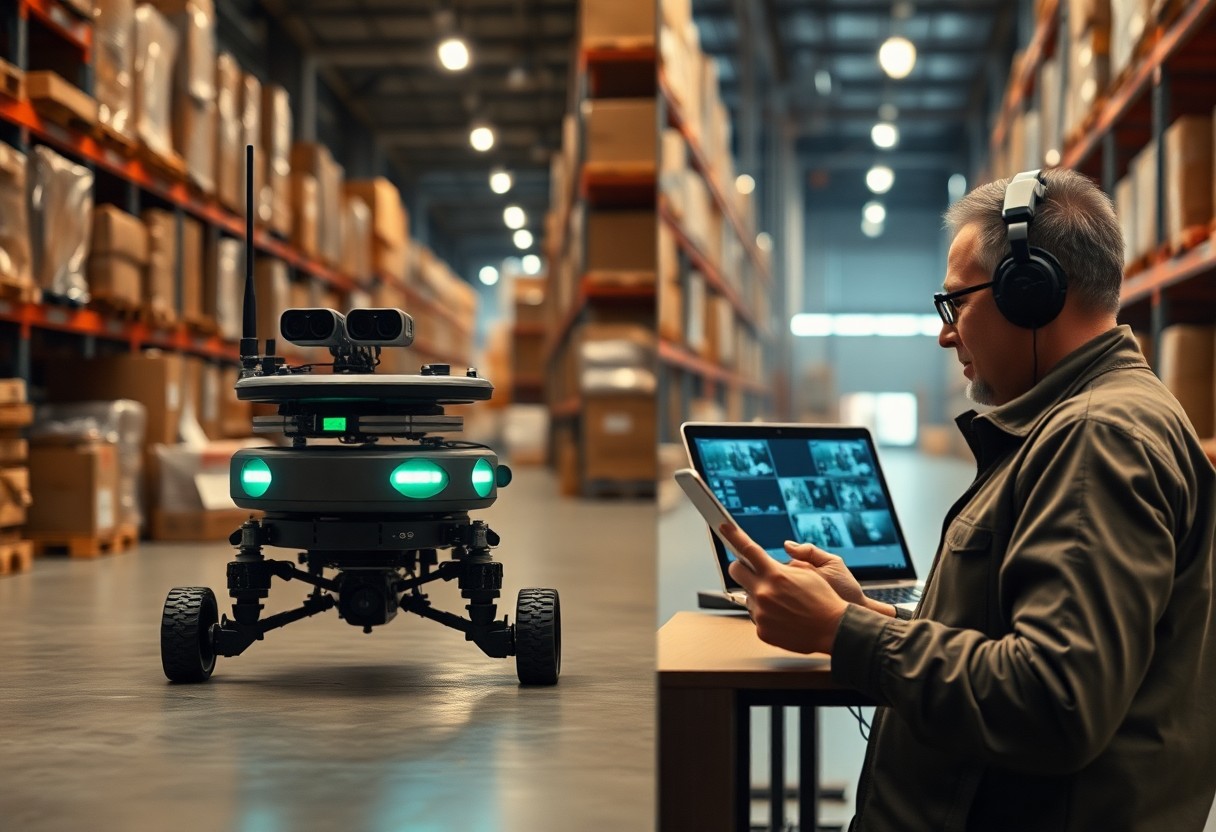
Defining Autonomous Agents
I define autonomous agents as systems that perceive environments, set goals, plan multi-step actions, and adapt without continuous human control; examples span open-source multi-step agents (Auto-GPT prototypes), field robots like Boston Dynamics’ Spot, and experimental vehicle systems. They combine decision-making, learning, and execution to achieve tasks, delivering operation with minimal human supervision but also carrying the risk of making high-impact decisions independently.
Characteristics of Autonomous Agents
They integrate perception, planning, and actuation into continuous closed-loop systems; I look for stacks with computer vision, sensor fusion (LiDAR/RGB), probabilistic planners (POMDPs), and reinforcement-learning policies. Performance is measured by latency, task success rate, and robustness to edge cases; you can test latency and fault injection to evaluate safety. In practice, real-time autonomy (sub-100ms control loops) and ability to fail safely separate production-ready agents from lab prototypes.
Applications of Autonomous Agents
I’ve seen agents deployed across logistics (warehouse coordination, last-mile routing), manufacturing (automated inspection), finance (algorithmic trading agents), and customer operations (transactional chatbots that execute tasks). Many run 24/7 to scale processes and reduce your human workload; the payoff is higher throughput and lower per-unit cost, while the downside is systemic risk if agents behave unexpectedly in critical domains.
For example, Kiva Systems (now Amazon Robotics) transformed warehouse workflows by automating pick-and-pack logistics, and Boston Dynamics’ Spot is used for remote inspections on industrial sites. I also track fintech pilots where agents execute multi-step trades under human-set risk envelopes, and healthcare triage agents that speed intake but face strict regulatory scrutiny because errors can cause direct harm.
Understanding Copilots
I view copilots as embedded, context-aware assistants that work inside the apps you already use-code editors, Office apps, CRM systems-designed to augment your decisions rather than replace them. GitHub Copilot (launched 2021) and Microsoft Copilot in Office (rolled out 2023) show how these tools provide inline suggestions, follow-your-constraints, and require human approval for final outputs; I flag hallucination and data leakage as the main operational risks while noting their ability to boost throughput when governance is in place.
Features of Copilots
I see five core features repeatedly: deep contextual awareness (chat + document/IDE state), real-time inline suggestions, API and enterprise-system integrations, role-based access and audit logging, and configurable guardrails or policies. Many modern copilots use models with context windows often exceeding 32k tokens, support human-in-the-loop workflows, and surface provenance metadata so you can trace sources and enforce compliance.
Use Cases for Copilots
I use copilot examples to show scope: developers get code completion and tests, analysts get Excel formulas and SQL generation, product writers get drafts and slide decks, and support teams get response suggestions. GitHub’s internal study cited productivity gains (around 55% faster on specific developer tasks), and enterprise pilots in 2023 demonstrated real-time summarization saving minutes-per-ticket in support workflows.
In practice I recommend treating copilot outputs as first drafts: validate code for security flaws, vet legal or clinical text for accuracy, and monitor for PII exposure. Set KPIs like time-to-complete, error rate, and rework; many teams aim for a 30-50% reduction in routine task time using A/B tests and automated audits to measure impact while limiting safety incidents.
Key Differences Between Autonomous Agents and Copilots
Level of Autonomy
I separate agents and copilots by autonomy: agents plan, chain tasks, and act without continuous supervision, while copilots generate suggestions you accept. For example, Auto-GPT-style agents can run unsupervised for hours, invoking APIs and modifying files, whereas GitHub Copilot-shown to improve developer speed by ~55% in GitHub’s study-stays in-editor. In practice, I treat agents as fully autonomous systems that can operate 24/7 and require stricter validation.
Human Interaction and Control
I design interaction models differently: copilots are assistive, offering inline code, prose, or design suggestions that you accept or edit; agents may take initiative, perform transactions, and escalate. I enforce human-in-the-loop checkpoints for high-risk actions, add role-based permissions, and use sandboxed credentials. Real deployments show that when goals are vague, agents may attempt unsafe operations, so I limit scopes and require explicit authorization for any action exceeding predefined thresholds.
I implement monitoring, audits, and rollback: logs with audit trails retained 90 days, real-time alerts on anomalous API calls, and automatic rollback on policy violations. For example, in a recent pilot I set two approval gates-initiation and execution-and constrained tokens to least-privilege scopes, preventing a scheduled agent from issuing charges; you should pair those controls with regular red-team tests and measurable KPIs to keep autonomy safe and productive.
Advantages and Disadvantages
I assess trade-offs constantly: autonomous agents shine at long-running, unattended automation-coordinating across 3-5 APIs to complete tasks-while copilots excel at contextual, on-demand assistance for you. I also note risks: agents can act unpredictably without guardrails, and copilots may over-rely on flawed prompts or limited session context. For a clear comparison see Understanding AI Agents vs. Chatbots | Microsoft Copilot.
Strengths of Autonomous Agents
I rely on agents to run complex pipelines: they maintain state, schedule retries, and make decisions-ideal for ETL jobs, lead scoring, or scheduling across calendars. In pilots I’ve seen agents process large batches and reduce manual handoffs, freeing your teams from repetitive work. The ability to operate autonomously 24/7 and resume after failures is their standout strength, enabling higher throughput and predictable SLA-driven outcomes.
Limitations of Copilots
I find copilots excellent for context-aware suggestions, but they have limits: short session memory, dependence on user prompts, and limited ability to execute cross-system workflows without explicit connectors. In practice, they speed knowledge work yet often require your intervention to complete transactions. The need for continuous human input constrains scale and prevents true unattended automation.
I worry about hallucinations and access control when you rely on copilots: they can surface incorrect facts and may expose sensitive data if integrations lack proper scoping. For example, a sales copilot suggesting pricing changes without permission can create compliance headaches. I mitigate these by enforcing scoped permissions, audit logs, and verification steps, because strong operational governance and validation are necessary to keep your processes safe.
Future Trends in Autonomous Systems
Evolution of Technologies
I foresee sensor fusion, edge AI, and LLM integration accelerating: lidar and vision stacks will merge with 5G/6G connectivity, and compute-per-watt should improve by >30% over five years per industry roadmaps. In autonomous vehicles, Waymo’s millions of miles logged prove scale matters; I expect that data-driven scaling will yield reduced intervention rates while adversarial robustness and standardized regulatory testing become mandatory.
Potential Impact on Industries
I expect logistics, transport, and healthcare to shift fast: Amazon’s deployment of tens of thousands of warehouse robots and Waymo’s fleet data show operational gains, and autonomous systems could help lower the WHO-reported ~1.35 million annual road fatalities through better perception and faster response. I advise you to prioritize reskilling programs as roles restructure within a few years.
I also see manufacturing pilots delivering double-digit productivity gains and tangible safety improvements; collaborative robots have cut repetitive-injury incidents in trials. You will face regulatory and liability hurdles, so I recommend 3-6 month measurable pilots to validate ROI, data governance, and compliance before broad rollout.
Autonomous Agents vs. Copilots – Understanding the Difference
Ultimately I distinguish autonomous agents as systems that act independently to pursue goals and manage workflows, while copilots are designed to assist you by offering suggestions, explanations, and tools that keep you in control. I assess trade-offs in autonomy, safety, and accountability so you can choose the right model for your use case, governance, and risk tolerance.
Author
MUZAMMIL IJAZ
Founder
Muzammil Ijaz is a Full Stack Website Developer, WordPress Specialist, and SEO Expert with years of experience building high-performance websites, plugins, and digital solutions. As the creator of tools like MagicWP and custom WordPress plugins, he helps businesses grow online through web development, SEO, and performance optimization.